Pelvic Health: What It Is and Why It Matters
Pelvic health is something many people don’t think about—until something doesn’t feel right. Yet the pelvic floor plays a critical role in how we move, function, and feel every day. At our clinic, pelvic health physical therapy is at the core of what we do, and we believe that with the right education and care, people can feel empowered rather than embarrassed to seek help.
What Is the Pelvic Floor?
The pelvic floor is a group of muscles, ligaments, and connective tissue that form a supportive sling at the base of the pelvis. These muscles support the bladder, bowel, and—depending on anatomy—the uterus or prostate. They also play an essential role in:
- Bladder and bowel control
- Sexual function
- Core stability and posture
- Breathing and pressure management
- Supporting the spine and hips
When the pelvic floor is working well, these functions happen automatically. When it’s not, symptoms can start to interfere with daily life.
Common Pelvic Health Symptoms
Pelvic health issues are incredibly common, yet often under-discussed. Some of the most frequent concerns we see include:
- Urinary leakage or urgency
- Difficulty fully emptying the bladder or bowels
- Constipation or fecal leakage
- Pelvic pain or pressure
- Pain with intercourse or tampon use
- Tailbone, hip, or low back pain
- Symptoms during or after pregnancy
- Pelvic organ prolapse
Many people assume these symptoms are a “normal” part of aging, pregnancy, or childbirth—but common does not mean normal, and help is available.
What Is Pelvic Health Physical Therapy?
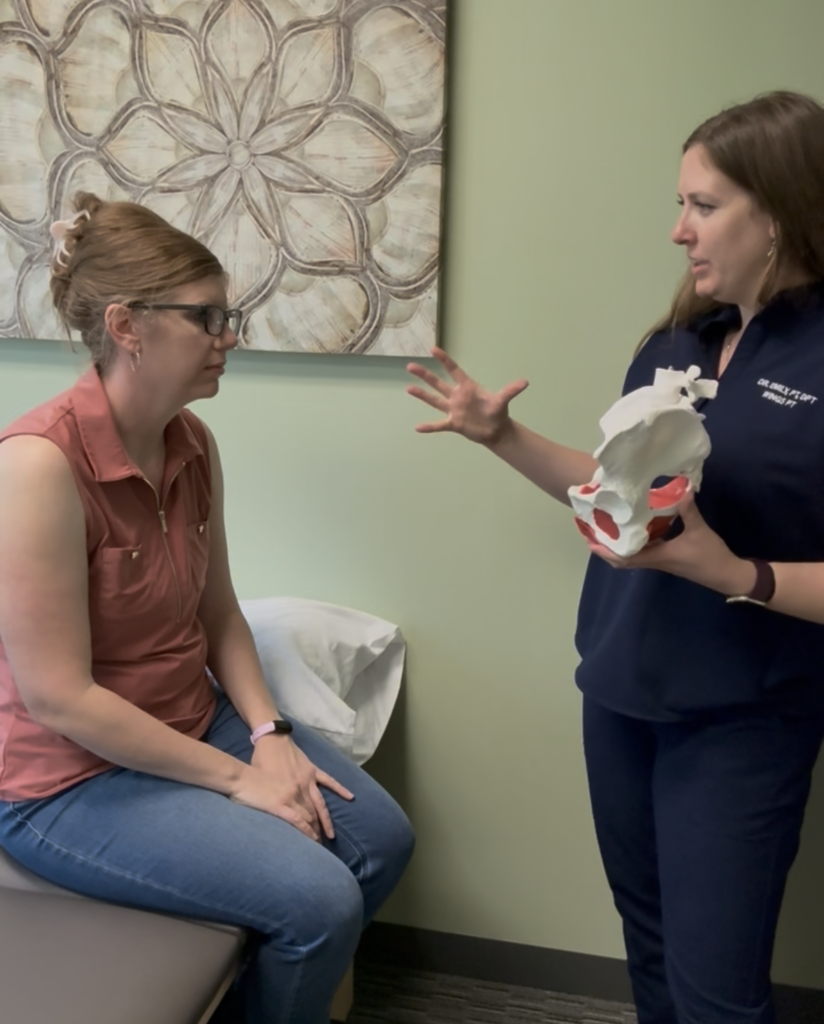
Pelvic health physical therapy is a specialized area of physical therapy focused on evaluating and treating conditions related to the pelvic floor and surrounding structures. Treatment is always individualized and based on your goals, symptoms, and comfort level.
A pelvic health physical therapist may assess:
- Pelvic floor muscle strength, coordination, and endurance
- Breathing patterns and pressure management
- Core and hip strength
- Posture and movement patterns
- Lifestyle factors that may be contributing to symptoms
Treatment may include exercises, manual therapy, education, breathing strategies, and functional retraining to help you return to the activities you enjoy.
Pelvic Health Is for More Than One Stage of Life
Pelvic health physical therapy isn’t just for postpartum recovery—although it can be incredibly helpful during and after pregnancy. We work with people across the lifespan, including:
- Athletes dealing with leakage or pelvic pain
- Individuals with chronic low back or hip pain
- People navigating menopause-related changes
- Those recovering from surgery
- Anyone experiencing symptoms that feel “off” but hard to explain
No matter your age or activity level, your pelvic health matters.
Why People Delay Getting Help
One of the biggest barriers to pelvic health care is stigma. Many people feel embarrassed bringing up symptoms like leakage or pain, even with a healthcare provider. Others assume nothing can be done or worry treatment will be uncomfortable.
In reality, pelvic health physical therapy is grounded in education, consent, and collaboration. You are always in control of your care, and treatment is designed to feel safe, respectful, and supportive.
Small Changes Can Make a Big Difference
With consistency and guidance, pelvic health physical therapy can lead to meaningful improvements. People are often surprised by how much better they feel once they understand how their body works and how to support it.
Whether your goal is returning to exercise, reducing pain, improving bladder or bowel control, or simply feeling more confident in your body, pelvic health physical therapy can help.
Ready to Learn More?
If you’ve been dealing with pelvic symptoms—or wondering if what you’re experiencing is normal—you’re not alone, and you don’t have to navigate it by yourself. Pelvic health physical therapy offers evidence-based, compassionate care focused on helping you feel better in your body.
If you have questions or want to learn whether pelvic health physical therapy is right for you, we’re here to help.