
How To Use Your Pelvic Wand: A Step-by-Step Guide
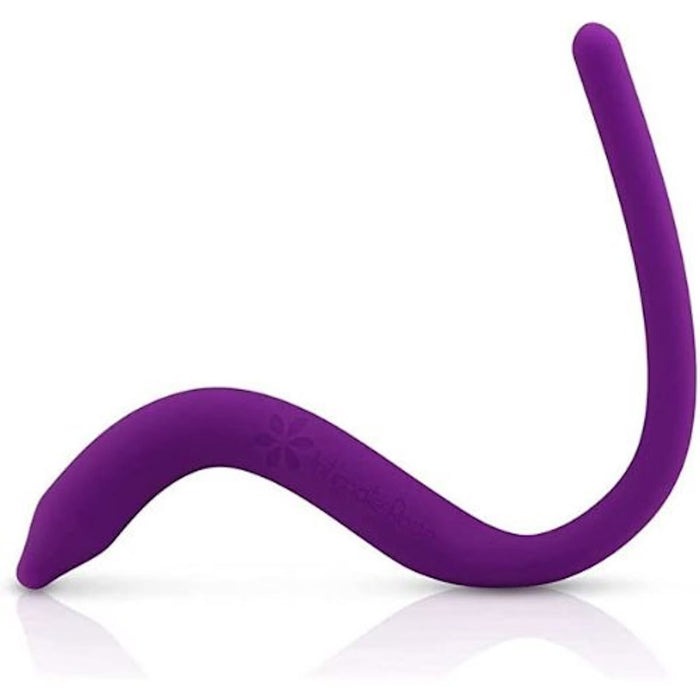
If your pelvic floor physical therapist recently recommended a pelvic wand, you might feel a mix of curiosity, hesitation, or even a little intimidation. What exactly is it? How does it work? Is it going to hurt?
First, take a deep breath. A pelvic wand is an ergonomic, finger-like self-treatment tool designed to help reduce tissue sensitivity, improve local blood flow, mobilize scar tissue, and calm an overactive pelvic floor—all from the comfort and privacy of your own home.
Think of it as a sensory retraining tool: it gives your brain and pelvic tissues a quiet, controlled opportunity to practice feeling safe with gentle, non-threatening pressure.
How Does a Pelvic Wand Work? A Pain Neuroscience Perspective
When pelvic floor muscles and vulvar tissues stay chronically tight, restricted, or irritated, the nervous system often turns up the “volume knob” on pain signals. This heightened sensitivity can restrict blood flow, irritate nearby nerves, and limit tissue flexibility—leading to pelvic pain, painful sex, or bowel and bladder dysfunction.
Using a pelvic wand helps through several key physiological pathways:
- Desensitizes Nerve Pathways: Gentle, sustained input sends non-threatening signals to your brain, retraining your nervous system to dampen alarm signals and tolerate touch.
- Restores Blood Flow & Tissue Flexibility: Light pressure helps release tension around tight muscle fibers and scar tissue, bringing fresh, oxygen-rich blood flow to irritated tissues.
- Calms the Sympathetic Nervous System: Combining gentle physical input with diaphragmatic breathing shifts your body out of “fight-or-flight” and into a parasympathetic (“rest and digest”) state.
- Improves Tissue Mobility & Scar Comfort: If you have perineal scar tissue from childbirth, gentle wand work can help mobilize the tissue so it glides smoothly without pulling or stinging.
What You’ll Need Before Getting Started
- Your Pelvic Wand: Standard wands are made of smooth, medical-grade silicone. Some offer vibrating settings or temperature-retaining cores.
- Mild, Unscented Soap & Warm Water: For cleaning your wand before and after every session.
- Water-Based Lubricant: Generously use a water-based, glycerin-free lube (like Slippery Stuff or Sliquid). Avoid silicone-based lubricants, as they degrade silicone wands!
- Pillows & Blankets: Comfort is essential for down-regulating your nervous system—prop yourself up so you aren’t straining your abdominal muscles.
Step-by-Step Guide: How to Use Your Pelvic Wand
1. Clean Your Wand Thoroughly
Hygiene comes first to prevent tissue irritation or infection
Always start by washing your entire wand with warm running water and mild, unscented soap. Pat dry with a clean paper towel.
2. Recline and Relax Your Body
Find a posture that allows your abdomen and glutes to completely let go
Lay back on your bed with knees bent, supporting your head, back, and upper body with plenty of pillows so you don’t feel like you are doing a “mini-crunch.” Let your knees fall open into a comfortable butterfly position.
Alternative: You can also lie on your side with a pillow between your knees and insert the wand from behind if that feels more accessible.
3. Add Water-Based Lubricant
Be generous with lube to prevent friction or burning
Cover the tip, sides, and first couple of inches of the wand with a liberal amount of water-based lube, as well as the vaginal or anal entrance.
4. Breathe & Prepare the Pelvic Floor
Use diaphragmatic breathing to signal safety to your pelvic floor
Take 3 to 4 slow diaphragmatic breaths. Inhale into your lower belly and ribs, feeling your pelvic floor gently drop and widen. As you exhale softly, let go of any stored tension in your jaw, shoulders, and glutes.
5. Gently Insert the Wand
Never force the wand or rush insertion
Hold the wand gently like a pencil or spoon. Position it straight at the entrance. For shallow muscles or perineal scar tissue, insert just the tip. For deeper muscles, slowly insert the first segment up to where the wand begins to curve.
6. (Optional) Soften Perineal Scar Tissue
Gentle tissue mobilization for post-childbirth tearing
If you are working on a perineal scar (and have clearance from your provider), place the tip just inside the entrance over or near the scar. Apply light downward pressure (stretching sensation should stay around a 3–4 out of 10) for about 60 seconds to help mobilize surrounding tissue. If the scar is extra sensitive, start on the tissues right next to it first.
7. Locate Muscle Tension (The Clock Method)
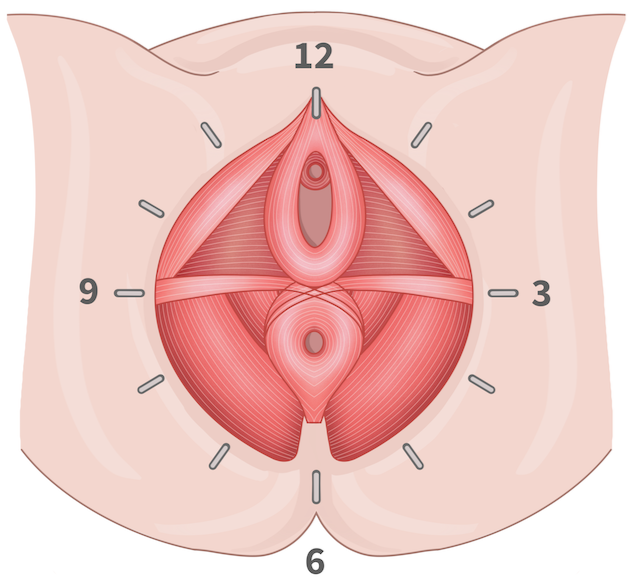
Visualize the vaginal opening as a clock face
https://thevagwhisperer.com/2021/05/12/doing-kegels-correctly/
Imagine the opening as a clock: 6 o’clock is straight down toward the perineum/anus, while 3 and 9 o’clock are out toward your thighs.
Important: Avoid applying pressure upward at 12 o’clock, as this is where your sensitive urethra sits. Rotate the handle toward the side you want to treat—angling the handle to one side gently directs the tip into the opposite muscle tissue.
8. Apply Gentle Pressure & Desensitize
Pair gentle, steady pressure with mindfulness and deep breaths
When you find a tender spot, hold constant, very light pressure for 20 to 30 seconds. Inhale deeply into your lower belly and visualize the tissue softening under the wand. Discomfort should stay at a manageable 3 to 4 out of 10 (a “good stretch/pressure” sensation, never sharp pain).
9. Move to the Next Spot & Clean Up
Repeat around the clock before switching hands and sides
As sensitivity eases, move around the clock on that side. When switching to the other side, straighten the wand tip back to center before rotating. Limit your session to 5 to 10 minutes total, once a day max. Finish by washing the wand again with warm water and mild soap, letting it air dry completely.
Pro-Tips for Wand Success
- Switch Your Guiding Hand: When treating the left side of your pelvic floor, try holding the wand with your right hand (and vice versa). Crossing over often gives you a better angle and keeps your wrist relaxed.
- Watch for “Nervy” Pain: If you feel a sharp, zinging, or electric sensation, you may be pressing directly on a nerve. Immediately shift the wand slightly away from that spot to return to a dull, muscle-stretch sensation.
- Stay in Control: You are in complete control of the depth, angle, and pressure. If discomfort escalates above a 4/10 or turns into pain, stop the session and check in with your therapist.
- Honor Your Body & Trauma Responses: Pelvic pain is complex and often tied to nervous system protection, past injury, or emotional trauma. If using the wand feels overwhelming or provokes a stress response, pause. Working alongside a physical therapist ensures you progress safely at a pace that feels grounded for you.
When to Consult Your Pelvic Floor PT
A pelvic wand is a tool to complement—not replace—professional care. If you experience sharp pain, unexplained bleeding, burning with urination, or symptoms that worsen after 24 hours, stop use and reach out to your physical therapist or physician for an evaluation.